Charles Schwab is a financial services company that provides a range of investment and banking solutions aimed at individual investors and institutional clients. The firm specializes in brokerage services, investment advisory, and wealth management, offering customers access to trading platforms, retirement accounts, and various investment products such as stocks, bonds, and mutual funds. In addition to its brokerage services, Charles Schwab also offers banking services, including checking and savings accounts, and promotes financial education to help clients make informed investment decisions. The company's commitment to low-cost investing and enhancing customer experience has positioned it as a prominent player in the financial services industry. Read More
Shares of financial services giant Charles Schwab (NYSE:SCHW) fell 6.9% in the afternoon session after the launch of a new artificial intelligence tool by financial software provider Altruist sparked concerns about disruption in the wealth management sector. The tech platform announced a new AI-powered tax planning tool, which triggered a selloff across several wealth management stocks. The news raised worries that artificial intelligence could upend the traditional business models of financial services firms. Other companies in the sector, including Raymond James Financial and Stifel Financial, also saw their stock prices fall as investors reacted to the potential competitive threat posed by new technology.
Shares of financial services firm Raymond James Financial (NYSE:RJF) fell 8.8% in the afternoon session after concerns grew that new artificial intelligence tools could disrupt the traditional financial advisory business.
The selloff in SCHW stock came after technology platform Altruist on Tuesday launched a new AI-powered tax planning tool within its Hazel platform causing a stir among investors over the firm's advisory practice.
Charles Schwab Corp (NYSE:SCHW) shares are falling on Tuesday. A new AI product from financial‑software firm Altruist sparked fresh worries about disruption in the wealth‑management industry.
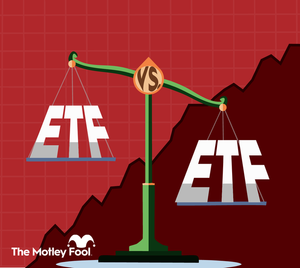
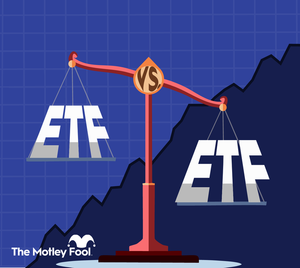
The Vanguard High Dividend Yield ETF and the Schwab U.S. Dividend Equity ETF both aim to deliver reliable income, but they go about it in very different ways. This comparison explains which approach is better suited for investors who depend on their dividends to hold steady through changing markets.
As the closing bell approaches on February 10, 2026, Wall Street is bracing for a dual-threat earnings afternoon that promises to serve as a litmus test for two of the market's most watched sectors: the automotive transition and the retail finance revolution. Ford Motor Company (NYSE:F) and Robinhood Markets
Date: February 10, 2026 Introduction In the volatile tapestry of American fintech, few names evoke as much passion and controversy as Robinhood Markets, Inc. (NASDAQ: HOOD). Once the poster child for the "meme stock" revolution and a lightning rod for regulatory scrutiny, Robinhood has undergone a metamorphosis that few analysts predicted five years ago. As [...]
Market volatility has dropped since the recent correction, but with plenty of items on the news front, we could see a volatility spike at any point. That could mean it’s a good time to look for stock with a low implied volatility percentile.
The Schwab Trading Activity Index™ (STAX) increased to 49.96 in January, up from its score of 48.48 in December. The only index of its kind, the STAX is a proprietary, behavior-based index that analyzes retail investor stock positions and trading activity from Schwab’s millions of client accounts to illuminate what investors were actually doing and how they were positioned in the markets each month.
As of February 9, 2026, Robinhood Markets (NASDAQ: HOOD) finds itself at a pivotal crossroads. Once the poster child for the "meme-stock" mania of 2021, the Menlo Park-based fintech has undergone a radical transformation into a diversified financial "super-app." Today, the company is in sharp focus as Wall Street analysts issue a wave of upgrades [...]